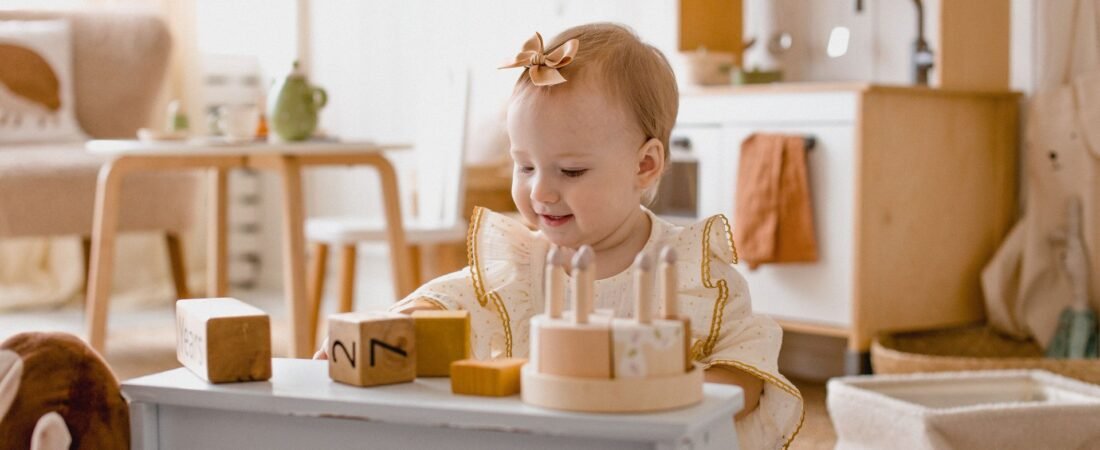
A beautiful play space does not need to be large, expensive or filled with educational toys. Sometimes, a quiet corner with a few carefully chosen activities is all a young child needs to explore, create and learn.
Montessori-inspired environments are designed around a simple idea: children become more confident and independent when their surroundings allow them to explore things for themselves.
You do not need a dedicated playroom or an entire collection of wooden toys to bring this approach into your home. With a little thought and a few practical adjustments, you can create a welcoming space that encourages curiosity and independent play.
Here is how to get started.
1. Start With a Space Your Child Can Call Their Own
You do not need a separate room. A small corner of the living room, bedroom or family space can work beautifully.
The important thing is to make the area feel inviting and easy for your child to use.
Consider:
- A soft rug or comfortable floor mat.
- A low shelf for displaying toys and activities.
- A small basket for books.
- A little table and chair, if space allows.
- Enough open floor space for building, movement and imaginative play.
Try to avoid overcrowding the area. A calm, uncluttered environment makes it easier for children to notice what is available and choose what interests them.
2. Choose Low, Accessible Storage
One of the most recognisable features of a Montessori-inspired play space is accessible storage.
Instead of keeping everything in a large toy box, arrange a small selection of toys on a low shelf where your child can see and reach them.
This gives children more opportunities to make their own choices and return activities when they have finished.
You can use:
- Low wooden shelves.
- Small open baskets.
- Shallow trays.
- Simple storage boxes.
The goal is not to create a perfectly styled room. It is to make toys easy to find, use and put away.
For safety, secure furniture to the wall and make sure shelves and storage are stable.
3. Display Fewer Toys at a Time
A room full of toys can sometimes make it harder for children to decide what to play with.
Rather than displaying everything, choose a small selection of activities and rotate them occasionally.
For example, you might offer:
- A simple wooden puzzle.
- A set of stacking blocks.
- A shape sorter.
- A few favourite books.
- A pretend-play activity.
- A creative activity, such as chunky crayons.
When your child becomes less interested in an activity, you can replace it with something from your storage collection.
Toy rotation does not need a strict schedule. Observe your child’s interests and adjust the selection when it feels appropriate.
4. Include Different Types of Play
A balanced play space offers opportunities for different kinds of exploration.
Think beyond educational toys and consider the experiences you want to encourage.
Building and problem-solving
Blocks, stacking toys and simple puzzles encourage children to experiment, construct and discover how things fit together.
Creative expression
Chunky crayons, paper, washable paints and age-appropriate modelling materials allow children to experiment with colours, textures and shapes.
Books and language
A small book basket with accessible picture books creates opportunities for quiet reading and storytelling.
Pretend play
A small collection of toy food, dolls, animals or everyday role-play objects can inspire imaginative stories.
You do not need every category at once. Start with activities your child already enjoys.
5. Create a Cosy Reading Corner
Books deserve a special place in a child’s environment.
A small reading corner can be as simple as a soft cushion, a basket of picture books and a comfortable place to sit together.
Try displaying books with their covers facing forward where possible. This makes it easier for young children to recognise and choose a story.
Keep the selection manageable and change a few books occasionally to introduce something different.
Most importantly, make reading a shared and enjoyable experience rather than a task.
6. Make Space for Practical Life Activities
Montessori-inspired learning is not limited to toys. Everyday activities can also offer valuable opportunities for children to practise independence.
Depending on your child’s age and abilities, you might create opportunities to:
- Put books back into a basket.
- Place toys on a shelf after playing.
- Help wipe a small table.
- Put clothes into a laundry basket.
- Help prepare a simple snack with adult assistance.
- Water a plant using a small, manageable container.
These activities help children feel involved in everyday family life.
Always choose tasks appropriate to your child’s development and supervise activities involving food, water, household items or tools.
7. Choose a Calm and Comfortable Colour Palette
A play space does not need to be completely neutral, but a visually calm environment can feel welcoming.
Natural materials, soft colours and simple storage can help create a space that feels peaceful without being boring.
You might combine:
- Warm white or cream walls.
- Natural wood furniture.
- Soft green or muted blue accents.
- Woven baskets.
- A few colourful toys and books.
Remember that the space is for your child, not just for photographs. Bright colours, favourite characters and well-loved toys can absolutely have a place.
8. Keep Safety at the Centre of Your Design
A child-friendly play space should be safe as well as attractive.
Before introducing furniture, toys or storage, consider:
- Secure shelves and furniture to prevent tipping.
- Keep heavy objects on lower shelves.
- Cover or secure electrical outlets where appropriate.
- Keep cords, strings and small objects out of reach.
- Choose age-appropriate toys and check for loose or damaged parts.
- Avoid unstable furniture that children may try to climb.
- Keep the play area away from hazards such as hot drinks, heaters and sharp objects.
Regularly check the space as your child grows and becomes more mobile.
9. Remember That Your Child Does Not Need a Perfect Playroom
It is easy to become distracted by beautifully styled playrooms online. But a Montessori-inspired environment is not about buying matching furniture or creating a picture-perfect room.
It is about observing your child and making small changes that help them explore their surroundings.
A simple shelf, a few interesting activities and an inviting place to read can be more than enough.
Start with what you already have. You can gradually improve the space as you learn what works for your family.
Final Thoughts
Creating a Montessori-inspired play space at home is less about decorating and more about thoughtful organisation.
Make activities accessible, offer a manageable selection of toys, include opportunities for creativity and everyday independence, and leave room for your child to explore.
You do not need a large budget or a dedicated playroom. A few simple changes can help turn an ordinary corner of your home into a place for little discoveries.
Related reading:
- 15 Montessori-Inspired Activities for Toddlers at Home
- 20 Screen-Free Activities for Toddlers at Home
- Best Montessori Toys for 1-Year-Olds
- Best Wooden Toys for Children Aged 1–3
Discover more ideas for playful learning in our Play & Learn collection.