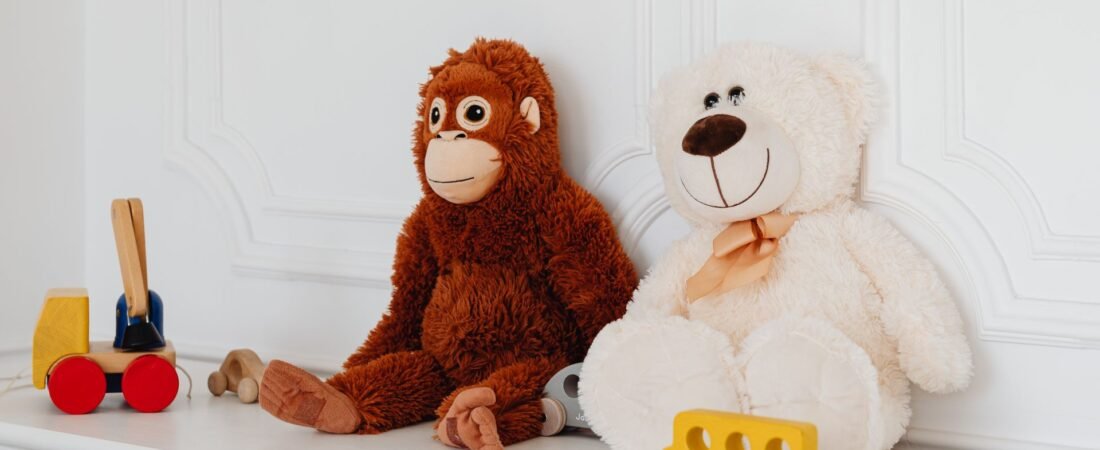
Choosing toys for a one-year-old can feel overwhelming. There are so many colourful toys, flashing lights and electronic gadgets available, but young children often enjoy something much simpler.
Montessori-inspired toys focus on hands-on exploration, practical skills and learning through play. Rather than doing everything for a child, they give little ones opportunities to experiment, repeat actions and discover how things work.
If you are looking for the best Montessori toys for 1-year-olds, here are ten thoughtful ideas to encourage curiosity, coordination and independent play.
What Makes a Good Montessori Toy for a 1-Year-Old?
At around one year old, children are developing rapidly. Many are learning to walk, improving their hand coordination, exploring cause and effect and becoming more interested in everyday objects.
A good Montessori-inspired toy should:
- Encourage hands-on exploration.
- Be simple and easy for a young child to understand.
- Support one or more developing skills.
- Allow children to repeat activities at their own pace.
- Be made from safe, age-appropriate materials.
You do not need a large collection of toys. A small selection of well-chosen toys can offer plenty of opportunities for discovery.
10 Best Montessori Toys for 1-Year-Olds
1. Wooden Stacking Rings
Stacking rings are a classic first learning toy. Children can practise taking the rings off, putting them back and gradually exploring how different sizes fit together.
Skills supported: Hand-eye coordination, problem-solving and early size recognition.
Look for a sturdy design with large rings and no small detachable parts.
2. Wooden Stacking Blocks
Simple wooden blocks offer many possibilities. A one-year-old might enjoy holding, tapping, stacking or knocking them over.
As children grow, they can begin building taller towers and experimenting with different arrangements.
Skills supported: Fine motor development, spatial awareness and creativity.
Choose lightweight, smooth blocks that are suitable for the child’s age.
3. Shape Sorter
A shape sorter introduces children to the idea that objects have different shapes and that some openings match particular pieces.
At first, your child may simply enjoy taking the shapes out and putting them back in. With practice, they may begin trying to match the pieces to the correct openings.
Skills supported: Problem-solving, hand-eye coordination and shape recognition.
For younger toddlers, choose a simple sorter with large pieces and easy-to-use openings.
4. Posting Box
A posting box allows children to put large objects through an opening and retrieve them again. This simple activity can be surprisingly engaging.
The repeated action helps children explore cause and effect while practising controlled hand movements.
Skills supported: Fine motor control, concentration and cause-and-effect learning.
Choose a model with large, age-appropriate pieces and no choking hazards.
5. Wooden Pull-Along Toys
Once children begin walking, pull-along toys can make movement more interesting. They can pull the toy around the room while practising balance and coordination.
Skills supported: Gross motor development, balance and coordination.
Look for a stable toy with a secure string or handle and follow the manufacturer’s age and safety guidance.
6. Simple Wooden Puzzles
A simple wooden peg puzzle can introduce early problem-solving. Start with a board containing just a few large pieces, ideally with easy-to-grip knobs.
Children may initially enjoy removing the pieces rather than completing the puzzle. That is perfectly fine.
Skills supported: Hand-eye coordination, visual recognition and problem-solving.
Avoid puzzles with small pieces that could present a choking risk.
7. Nesting Cups
Nesting cups are versatile toys that can be stacked, nested, filled and emptied. They can also be used during supervised water play.
Their simple design encourages experimentation without requiring complicated instructions.
Skills supported: Size comparison, coordination and early mathematical thinking.
Choose sturdy cups without sharp edges or small detachable components.
8. Object Permanence Box
An object permanence box usually consists of a box with an opening and a tray or compartment where an object appears after being dropped inside.
It gives children an opportunity to explore what happens when an object disappears from view and reappears.
Skills supported: Cause-and-effect learning, coordination and early problem-solving.
Choose a design intended for this age group, with large balls or objects that cannot be swallowed.
9. Sensory Balls
Soft sensory balls with different textures can encourage babies and toddlers to touch, squeeze, roll and explore.
They are also useful for simple games such as rolling a ball back and forth with a parent.
Skills supported: Sensory exploration, coordination and movement.
Check that the balls are suitable for the child’s age, durable and too large to swallow.
10. Board Books
Books are an important part of a child’s learning environment. At one year old, simple board books with clear illustrations, familiar objects and short text are a lovely starting point.
Let your child turn the pages, point to pictures and revisit favourite stories.
Skills supported: Language development, visual recognition and early reading habits.
Choose durable board books with thick pages and age-appropriate content.
How Many Montessori Toys Does a 1-Year-Old Need?
You do not need to buy all ten toys at once. A small selection of around five to eight suitable toys is a practical starting point.
Try offering only a few toys at a time and rotating them occasionally. This can make familiar toys feel interesting again without constantly buying new ones.
Observe what your child enjoys. Some children love stacking and building, while others prefer books, movement or putting objects in and out of containers.
The best toy is one that suits your child’s current interests and abilities.
Are Wooden Toys Better Than Plastic Toys?
Wooden toys are often associated with Montessori-inspired play because they tend to have simple designs and natural textures. However, wood is not automatically better than plastic.
A well-designed plastic toy can also be educational, durable and safe. What matters most is the toy’s design, quality, age suitability and the opportunities it offers for exploration.
Choose toys based on how your child can use them rather than the material alone.
A Note on Toy Safety
At this age, children often explore objects by putting them in their mouths. Always check the manufacturer’s recommended age, inspect toys for damage and avoid items with small parts that could cause choking.
Supervise play, particularly with balls, stacking pieces, strings and toys containing removable components. For further guidance, consult your country’s official toy-safety advice.
Final Thoughts
The best Montessori toys for 1-year-olds do not need to be complicated or expensive. Simple toys such as stacking rings, blocks, nesting cups and board books can provide meaningful opportunities to explore, practise new skills and enjoy independent play.
Start with a few carefully selected toys, follow your child’s interests and remember that everyday play is an important part of learning.
Related reading:
- Best Educational Toys for 2-Year-Olds
- Best Wooden Toys for Children Aged 1–3
- 15 Montessori-Inspired Activities for Toddlers at Home
Discover more ideas for playful learning in our Play & Learn collection.